
نوح · Noah, a desktop workspace for coding agents
One project. Every coding agent. Nothing lost in between.
Claude Code, Codex and others work in the same conversation, on the same project memory, while you decide what each one may touch.
One conversation, many engines
Switch agents without starting over.
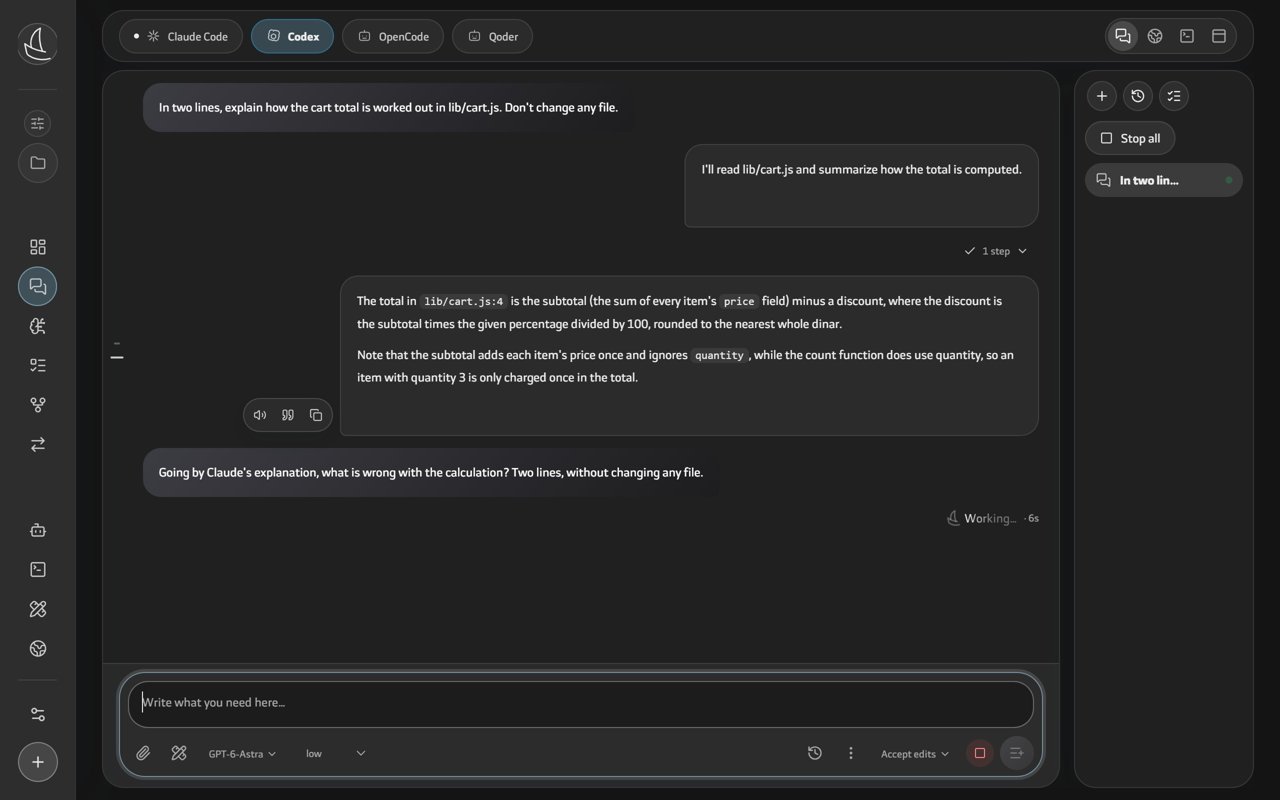
Ask Claude Code to explain a bug, then hand the same conversation to Codex to fix it. Each engine keeps its own session, model and permission level.
- A returning engine is caught up once. Noah sends the messages it has not seen, taken from the stored record. No other model writes a summary.
- The mark moves only after a saved turn. A stopped or failed turn never counts as seen.
- Close the window and nothing is lost. The record lives in a local database, not on the screen.
Claude Code
Claude Code is where Noah goes deepest.
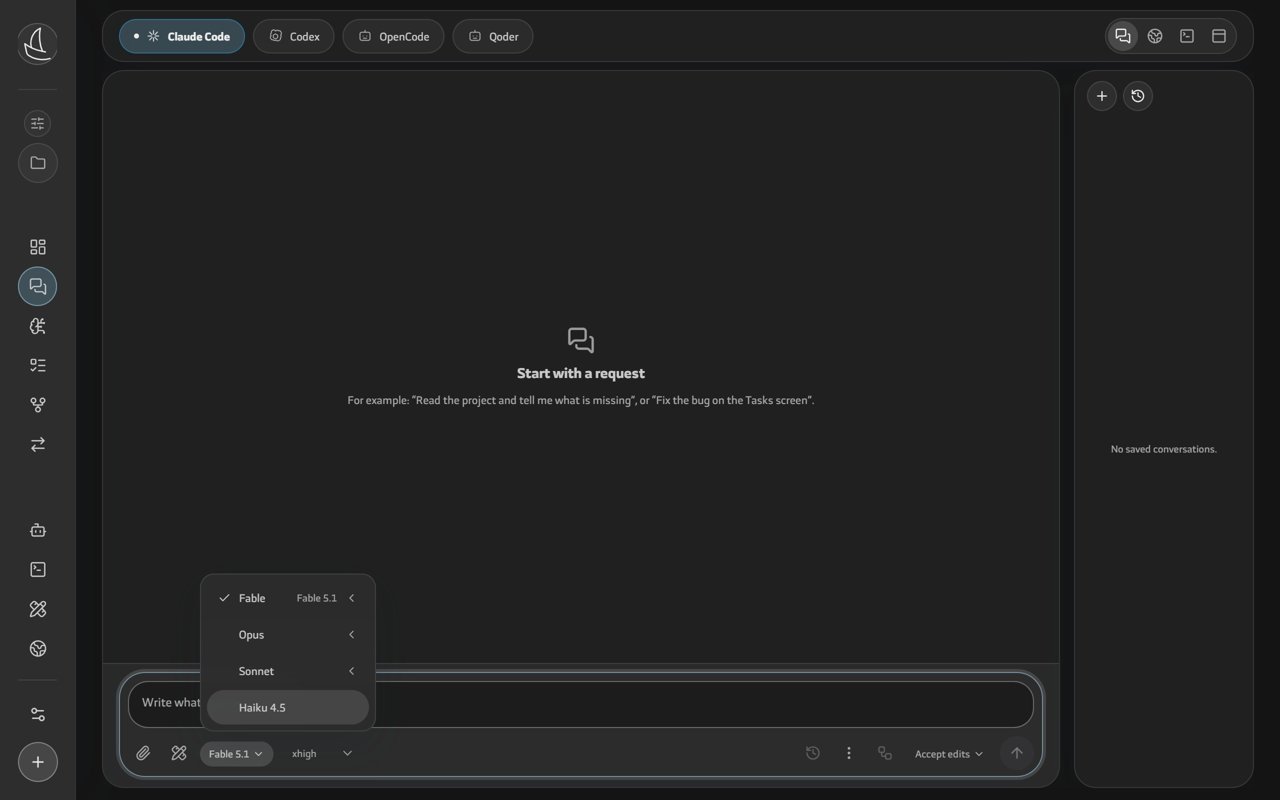
Noah reads the version of Claude Code installed on the machine and offers only the models that version can run. Models are grouped by family, with an effort level for each conversation.
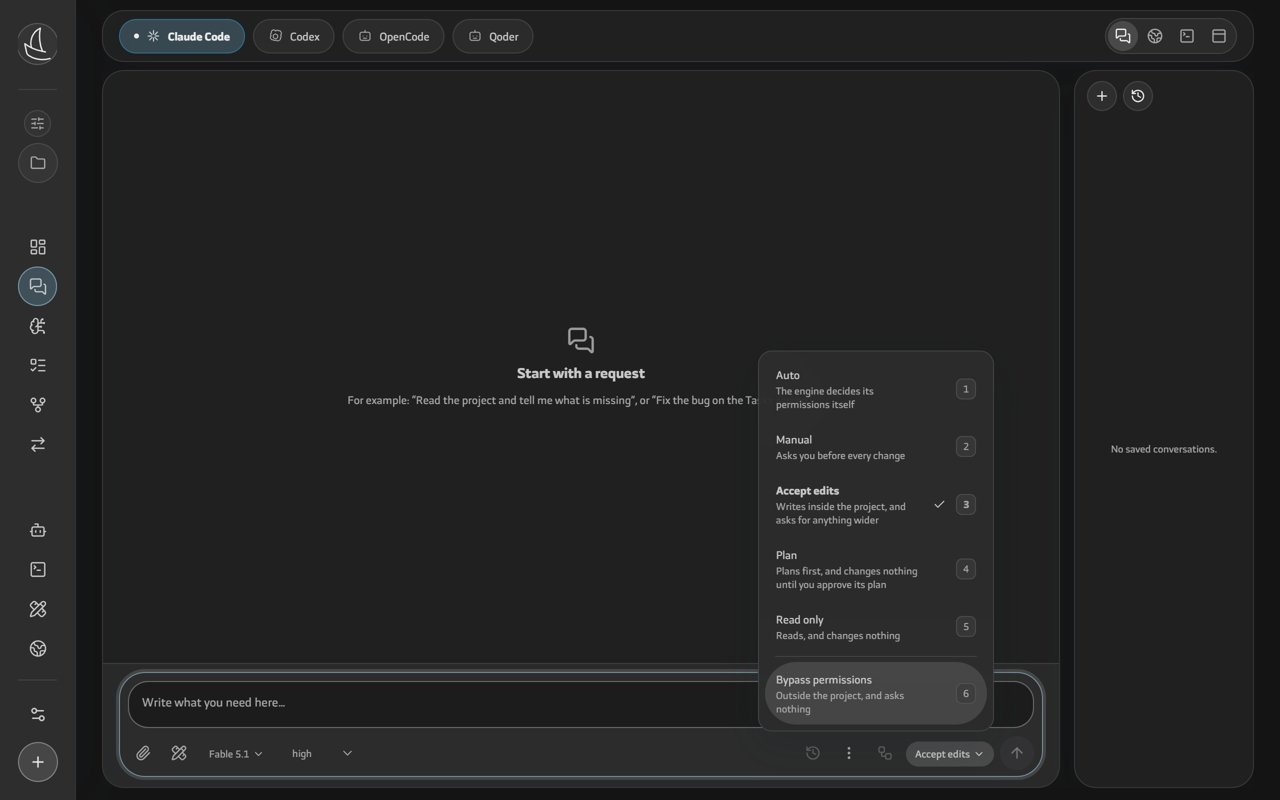
- Plan mode asks first. The plan appears on a card, and nothing runs until you approve it.
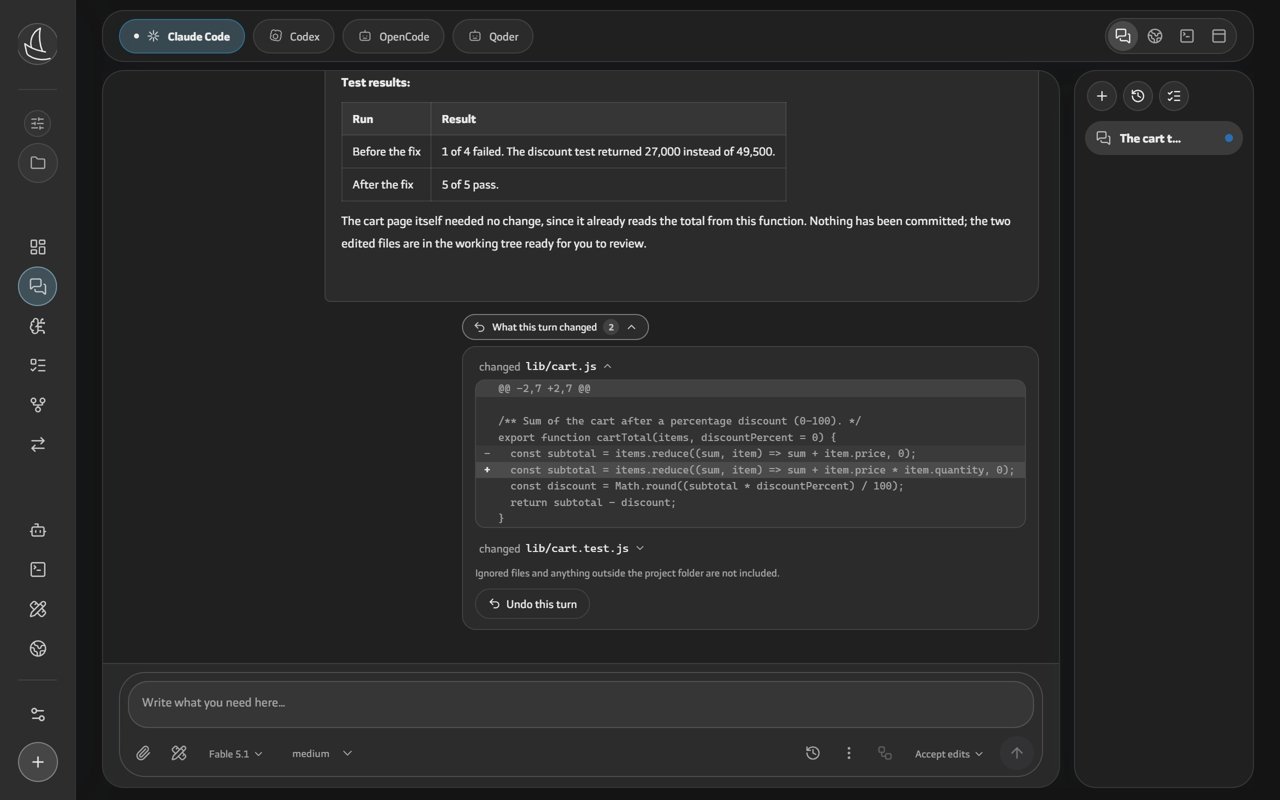
- Every turn that wrote files leaves a changes card with the diff and a one-click undo.
- Long jobs split across engines by weight. Light tasks go to Haiku, heavy ones to Opus, with an optional review by a second engine.
- Claude Code starts warming at the first letter you type. On our machine the first model request went from 5.0 s to 0.7 s.
- One press installs Claude Code from the overview, using Anthropic's own installer.
Reaches the API too
An Anthropic account can be added with its own key. Noah asks the Models API how each model takes thinking and sends adaptive thinking with the effort the model lists, or a token budget for models that still take one.
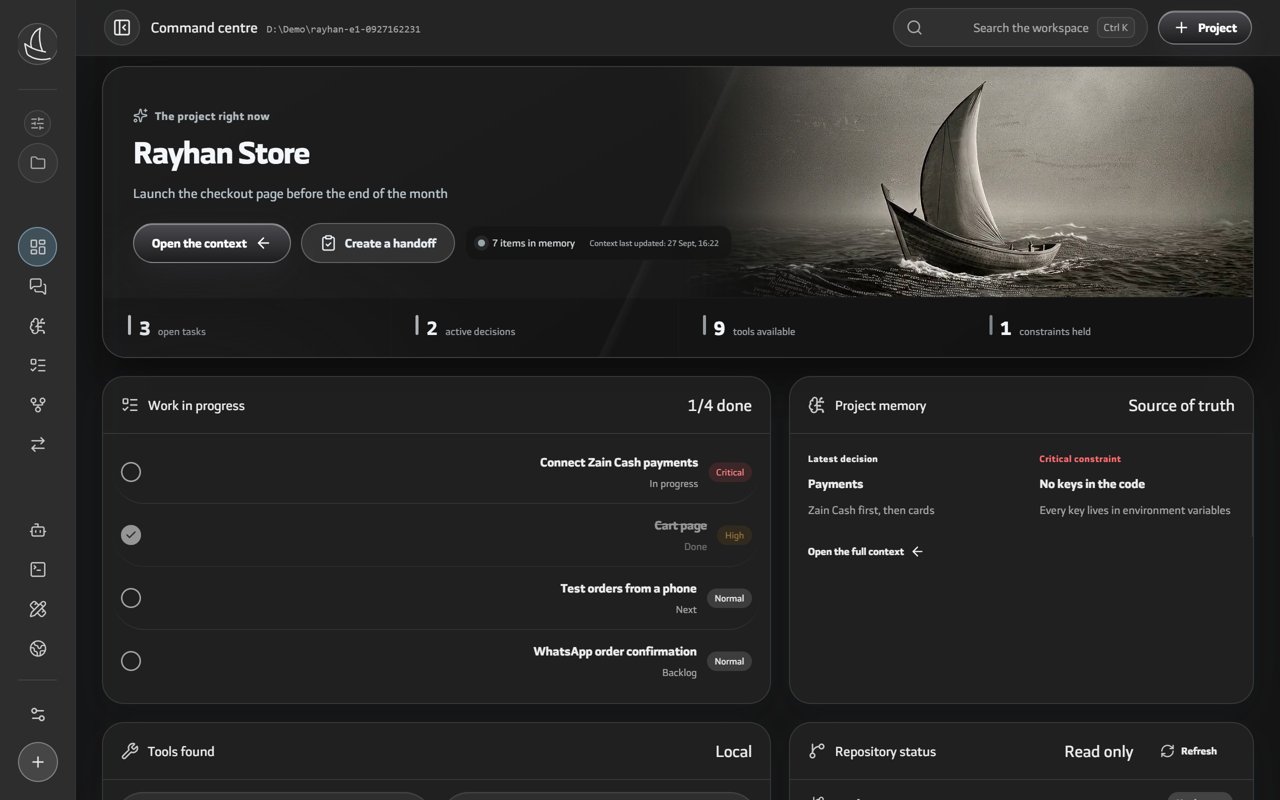
The workspace around the chat
The project's memory is read before every engine starts.
The goal, the decisions and the constraints are written once in Noah. Every engine receives them, so a new engine does not begin from zero.
Browser with real tabs
An engine can read, click and type in the page you have open. Point at an element yourself and it becomes a chip inside your message.
Terminal beside the chat
An internal terminal sits next to the conversation, so a command and its answer stay in one place.
Phone as a remote
Drive conversations from a phone through a tunnel you run yourself. Paired devices are listed and can be revoked at any moment.
Project map
A map of the project's files and how they connect, that an engine can also read before it changes anything.
Control and trust
You decide what an agent may touch.
Agents write files and run commands. Noah keeps that visible, reversible and local.
Unknown means read-only
An absent or unrecognised permission level reads and changes nothing. Full access is reached only by its exact name.
Keys stay in the Windows vault
API keys live in Windows Credential Manager. They never enter the database, the logs or the handoff files.
Logins are filled by name
An engine asks Noah to fill a saved site login. It never receives the password, so it cannot reach a message or a record.
Every turn can be undone
File changes are shown on a card and can be restored. Going back to an earlier message undoes what later turns wrote.
No server in the middle
Noah has no backend. Engines sign in with their own accounts, and the phone remote uses a tunnel the owner starts.
Signed updates
Each release carries a signed manifest, and an update with a changed byte is refused before it installs.
Shipping now
A working product with its reasons written down.
Noah is a Tauri 2 desktop app with a React 19 interface and a Rust core, kept to a strict build discipline.
Changes are also checked on the built app through a real debugging port, with real pointer events, before they ship. Today Noah runs on Windows.
What is next
Noah as a full agent host on the Claude API.
Today Claude Code does the agent work, and an Anthropic API account answers in text. The next stage gives that account the same abilities: tools, a loop that runs them, and memory that survives the session.
- PlannedA real tool-use loopTool definitions sent with each request, parallel calls, results returned with errors flagged, and a hard limit with a Stop button.
- PlannedHistory kept as the API stores itTool calls, results and thinking blocks with their signatures, so the next turn resumes exactly where the model left off.
- PlannedTools loaded on demandA small set up front and the rest found through tool search, so the prompt cache stays warm.
- PlannedMemory, web search and web fetchThe memory tool for facts that outlive a conversation, and Anthropic's own search and fetch tools.
- PlannedNoah as an MCP client, and Skills foldersThe owner's own tool servers and skill files, with their names and permissions shown in the conversation.
- PlannedPermission modes per conversationAsk, Auto and Full, with the files an agent may reach listed by the owner and a record of what it did.
Where support goes
What Claude support would let us finish.
Noah is built for Arabic-speaking developers first: right-to-left from the first pixel, and licences that can be paid with local phone credit. Claude is the engine we build deepest for.
API credits for live verification
An engine joins Noah only after its real stream has been captured on a real account. The agent host needs many live tool turns across models, thinking levels and long sessions.
A technical line to the Claude teams
Noah offers models by Claude Code version and reads each model's capabilities from the Models API. Early word on changes keeps those lists right on release day.
Early access to new models
So the family picker, the effort levels and the thinking settings are ready the day a model ships, in Arabic and in English.
We can walk the team through Noah live, on a real project, in a short call. Write to [email protected].
Try Noah 0.1.18